

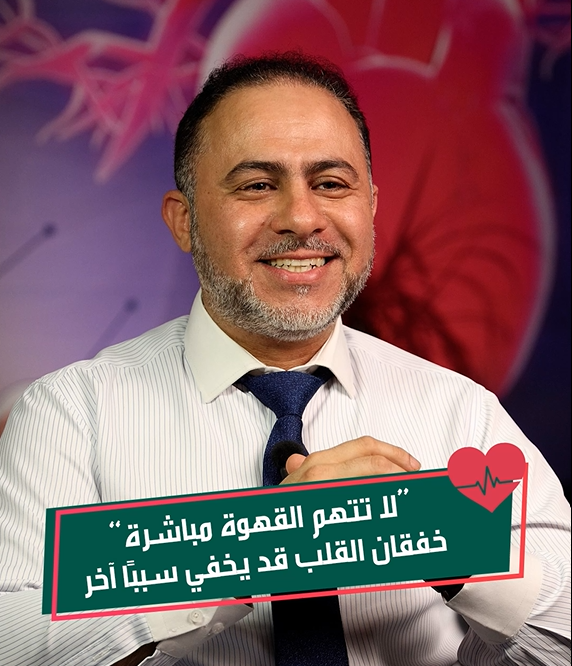
Heart palpitations are the sensation of becoming unusually aware of your heartbeat.
You may feel that your heart is:
- Beating faster than usual
- Pounding harder than usual
- Fluttering
- Skipping a beat
- Adding an extra beat
- Beating irregularly
When this happens after drinking coffee, it is easy to assume:
“The coffee caused it”
Sometimes, that may be true.
But the relationship between coffee, caffeine, and heart rhythm is more complicated than it may seem.
Does Coffee Actually Cause Heart Rhythm Problems?☕
Caffeine is a stimulant. In some people, it can temporarily increase alertness, raise heart rate slightly, or simply make the heartbeat feel more noticeable.
However, feeling your heartbeat more strongly is not the same as having a dangerous cardiac arrhythmia.
Current evidence does not suggest that moderate coffee consumption increases the overall risk of most cardiac rhythm disorders in the general population.
Some observational studies have even found an association between coffee consumption and a lower risk of certain arrhythmias. However, this does not mean that coffee should be considered a treatment for arrhythmias.
The response to caffeine also varies significantly from one person to another.
One person may drink several cups without noticing any symptoms, while another may experience palpitations after a relatively small amount.
Why Might Coffee Make Me Feel My Heartbeat?🧠
Several factors may contribute.
1. Individual Sensitivity to Caffeine
Some people are naturally more sensitive to caffeine’s stimulating effects.
They may experience:
- A temporary increase in heart rate
- Stronger or more noticeable heartbeats
- A greater awareness of their heartbeat
2. The Amount of Caffeine
One cup of coffee is very different from several cups consumed within a short period.
Caffeine content can also vary depending on:
- The type of coffee
- Serving size
- Brewing method
- Strength of the drink
It is also important to remember that caffeine may come from other sources, including tea, energy drinks, supplements, and certain medications.
3. Stress and Anxiety
Coffee may not be the only factor.
If you are under stress, sleeping poorly, feeling anxious, or going through a demanding period, caffeine may make palpitations feel more noticeable.
4. Other Causes of Palpitations
Palpitations can have many possible causes, including:
- Abnormal heart rhythms
- Anemia
- Thyroid disorders
- Certain medications or stimulants
- Dehydration
- Sleep deprivation
- Anxiety or stress
- Electrolyte abnormalities
That is why new or recurrent palpitations should not automatically be blamed on coffee.
Key Takeaway❤️
Coffee is not automatically an enemy of your heart.
For most people, moderate coffee consumption does not appear to increase the risk of cardiac arrhythmias.
However, caffeine affects people differently.
Some individuals may genuinely notice palpitations after consuming caffeine.
The important distinction is between:
Feeling your heartbeat more strongly
and
Having a clinically significant heart rhythm disorder.
If palpitations are new, recurrent, or changing, it is worth finding out why they are happening.
How Does a Cardiologist Think?🩺
When a patient tells me:
“Every time I drink coffee, my heart starts racing.”
My first question is not:
“Why haven’t you stopped drinking coffee?”
Instead, I want to understand exactly what the patient is experiencing.
I may ask:
- When do the palpitations begin?
- Do they start immediately after coffee?
- Do they also happen at other times?
- How long do they last: seconds, minutes, or hours?
- Does your heart feel fast, irregular, or like it is skipping beats?
- Do the palpitations occur at rest or during physical activity?
- How much coffee do you drink?
- Are you also consuming caffeine from tea, energy drinks, supplements, or medications?
I also ask about associated symptoms such as:
- Chest pain or pressure
- Shortness of breath
- Dizziness
- Fainting
- Near-fainting
Because the goal is not simply to prove that coffee is responsible.
The real goal is to determine whether the palpitations are simply a heightened awareness of the heartbeat or whether they could represent an arrhythmia or another medical condition that requires evaluation.
Tests Your Doctor May Recommend🔬
Not everyone with palpitations needs the same tests.
The evaluation depends on the nature of the symptoms, medical history, physical examination, and cardiovascular risk factors.
Your doctor may consider:
Electrocardiogram — ECG❤️
An ECG can identify certain abnormal heart rhythms and other findings that may require further evaluation.
However, if palpitations are intermittent, an ECG performed in the clinic may be completely normal simply because the episode is not occurring at that moment.
Ambulatory Heart Rhythm Monitoring📱
If symptoms come and go, your doctor may recommend monitoring your heart rhythm for a longer period using:
- A Holter monitor
- An event monitor
- Other wearable or ambulatory rhythm-monitoring devices
The goal is to record the heart rhythm while the palpitations are actually happening.
Blood Tests🩸
Depending on your symptoms and medical history, your doctor may recommend:
- Complete blood count to check for anemia
- Thyroid function tests
- Electrolyte testing when clinically appropriate
Echocardiogram❤️
An echocardiogram may be recommended when there is a clinical reason to evaluate the structure and function of the heart.
Important: Having palpitations after drinking coffee does not automatically mean that you have serious heart disease. But it also does not prove that coffee is the cause.
Frequently Asked Questions❓
Can coffee cause heart palpitations?
Yes, in some people.
Caffeine can temporarily increase heart rate or make the heartbeat feel more noticeable, particularly in people who are sensitive to caffeine or consume larger amounts.
However, moderate coffee consumption does not appear to increase the overall risk of most cardiac arrhythmias in the general population.
Should I stop drinking coffee if I experience palpitations?
Not necessarily.
If you consistently notice palpitations after caffeine, reducing your intake or temporarily avoiding caffeine may be reasonable.
However, if the palpitations are new, recurrent, or becoming more frequent, simply stopping coffee should not be the only step.
Another underlying cause may need to be considered.
I’ve been drinking coffee for years. Why would it suddenly cause palpitations now?
Coffee may not actually be the cause.
Changes in:
- Sleep
- Stress
- Hydration
- Medications
- Illness
- Caffeine intake
- Heart rhythm
can all contribute to new palpitations.
Does every palpitation mean I have an arrhythmia?
No.
Palpitations are a symptom, not a diagnosis.
They may result from normal heartbeats that suddenly feel more noticeable, or they may be caused by an abnormal rhythm.
The clinical context and proper evaluation help determine the difference.
When should palpitations be considered concerning?
Seek urgent medical attention if palpitations are accompanied by:
- Significant chest pain or pressure
- Severe shortness of breath
- Fainting
- Severe dizziness
Coffee Isn’t Always the Culprit📊
Palpitations after coffee?
Possible contributors may include:
☕ Caffeine
😰 Stress or anxiety
😴 Poor sleep
💧 Dehydration
💊 Certain medications
❤️ Heart rhythm disorders
🩸 Anemia or other medical conditions
Don’t automatically assume the cause.
If palpitations are new or recurring, find out why.
Dr. Malik’s Advice💬
If you have been drinking coffee for years without any problems and suddenly develop palpitations, do not automatically assume that coffee is responsible.
Pay attention to:
- When the symptoms occur
- How long they last
- How much caffeine you are consuming
- Whether they happen without caffeine
- Whether other symptoms occur at the same time
Remember that palpitations can have many different causes.
If they become recurrent or are accompanied by concerning symptoms, do not delay medical evaluation.
One-Minute Message❤️
Don’t blame the coffee until you know the real cause.
Related Articles 🔗
- Not Every Heart Palpitation Means Serious Heart Disease
- Not Every Heart Rate Below 50 Means Your Heart Is Weak
- A Normal ECG Doesn’t Always Mean Your Heart Is Completely Healthy
- Not Every Chest Pain Is a Heart Attack
Medical Disclaimer
This content is intended for general health education and does not replace individualized medical advice, diagnosis, or treatment.
People respond differently to caffeine, and palpitations can have many possible causes.
If palpitations are new, recurrent, or associated with significant chest pain or pressure, severe shortness of breath, fainting, or severe dizziness, seek urgent medical attention.
Scientific References📚
- American Heart Association — Evidence and scientific information regarding caffeine and cardiovascular health
- 2023 ACC/AHA/ACCP/HRS Guideline for the Diagnosis and Management of Atrial Fibrillation
- European Society of Cardiology — Guidelines for the management of atrial fibrillation
- Contemporary evidence regarding coffee, caffeine, and cardiac arrhythmias