

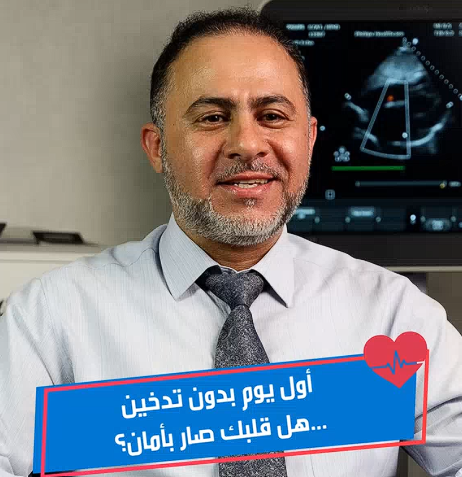
Smoking is not only a lung problem. It is a major cardiovascular risk factor.
Smoking cessation is one of the most important steps for protecting heart health and lowering long-term cardiovascular risk.
Tobacco smoke contributes to inflammation, increases the tendency of blood to clot, affects blood vessels, and promotes the development and progression of atherosclerosis. Continuing to smoke means continuing exposure to these harmful effects.
The good news is that your body begins recovering after your last cigarette.
After quitting, heart rate and blood pressure begin moving down from the nicotine-related elevation. Over the following days, carbon monoxide levels in the blood decline, and additional health benefits continue to develop over the weeks and months that follow.
For cardiovascular health, however, the benefit is not something that can be measured only in the first day or two.
According to CDC data:
- Within 1–2 years, the risk of heart attack drops sharply.
- Within 3–6 years, the excess risk of coronary heart disease falls by about half.
- After about 15 years, the risk of coronary heart disease approaches that of someone who has never smoked.
This does not mean every person reaches the same risk level on exactly the same timeline. Cardiovascular risk is also influenced by age, blood pressure, cholesterol, diabetes, body weight, physical activity, family history, and whether someone already has cardiovascular disease.
So quitting smoking is not an instant “reset button” for the heart.
It is the beginning of a powerful process that reduces ongoing cardiovascular damage and progressively lowers risk.
And importantly, people who already have coronary heart disease still benefit substantially from quitting. Smoking cessation can reduce the risk of future cardiovascular events and death compared with continuing to smoke.
Key Takeaway🧠
Quitting smoking does not erase cardiovascular risk in one day—but it starts reducing that risk and the benefits continue to accumulate over time.
So instead of thinking:
“I quit a week ago, and nothing has changed.”
Think:
“Since I quit, I have stopped adding new tobacco-related damage to my cardiovascular system.”
That is already a major win.
How Does a Cardiologist Think?🩺
A cardiologist does not simply ask:
“Did you quit smoking?”
The bigger picture matters.
Your doctor may also consider:
- How many years you smoked.
- How many cigarettes you smoked per day.
- When you smoked your last cigarette.
- Your blood pressure.
- Your cholesterol levels.
- Whether you have diabetes.
- Your family history of cardiovascular disease.
- Whether you have symptoms such as chest pain, shortness of breath, or palpitations.
- Whether you have known coronary artery disease.
Quitting smoking is a crucial step, but it is only one part of your overall cardiovascular risk assessment.
Tests Your Doctor May Recommend🔬
Not everyone who quits smoking automatically needs cardiac testing.
The need for testing depends on your age, symptoms, cardiovascular risk factors, and medical history.
Depending on the situation, your clinician may recommend:
- Blood pressure measurement.
- A cholesterol and lipid profile.
- Blood glucose or HbA1c testing when appropriate.
- An ECG if symptoms or clinical circumstances warrant it.
- Additional testing, such as an exercise stress test, cardiac imaging, or coronary assessment, when symptoms and overall cardiovascular risk justify further evaluation.
The key point is this:
Do not order random heart tests simply because you used to smoke.
A better approach is to base testing on your symptoms and overall cardiovascular risk.
Frequently Asked Questions❓
Does quitting smoking immediately make my heart the same as a never-smoker’s heart?
No. The benefits begin quickly, but cardiovascular risk declines progressively over time. After approximately 15 years, the risk of coronary heart disease can approach that of someone who has never smoked, although individual risk varies.
Is it too late to quit if I have smoked for many years?
No. Quitting smoking provides health benefits at any age, even for people who have smoked for many years or heavily.
Does quitting help if I already have heart disease?
Absolutely. People with established coronary heart disease can still substantially benefit from smoking cessation, including a lower risk of future heart attacks and cardiovascular death compared with continued smoking.
Does the first smoke-free day matter?
Yes. Your body begins a series of positive changes after your last cigarette. The most important step, however, is maintaining long-term abstinence from smoking.
Is vaping a safe alternative for my heart?
No tobacco or nicotine product should be considered completely safe for cardiovascular health. The strongest health benefit comes from stopping tobacco and nicotine exposure altogether.
Infographic Summary — What Happens After You Quit?📊
Your last cigarette 🚭
⬇️
Within minutes
Heart rate and blood pressure begin moving down from the nicotine-related spike.
⬇️
Within days
Carbon monoxide levels in the blood return toward normal.
⬇️
1–2 years
The risk of heart attack drops sharply.
⬇️
3–6 years
The excess risk of coronary heart disease falls by about half.
⬇️
Around 15 years
The risk of coronary heart disease approaches that of someone who has never smoked.
Bottom line:
The longer you remain smoke-free, the greater the cardiovascular benefit.
Dr. Malik’s Advice💬
If you quit smoking yesterday, last week, or years ago…
Never underestimate the value of that decision.
Your heart may not send you a notification every day saying, “Thank you for quitting,” but your body and blood vessels continue to benefit from staying smoke-free.
And if you slip and smoke a cigarette, do not assume that everything is lost.
Try again.
The goal is not perfection from the first attempt. The goal is to become smoke-free and stay there.
One-Minute Message❤️
The best day to protect your heart is the day you decide to quit smoking.
Related Articles🔗
- How Does Smoking Damage the Heart and Arteries?
- Does Smoking Raise Blood Pressure?
- Does Quitting Smoking Lower Heart Attack Risk?
- What Happens to Your Body After Your Last Cigarette?
- How Can You Reduce Your Cardiovascular Risk?
For people looking to improve heart health after quitting smoking, staying smoke-free remains one of the most effective ways to reduce cardiovascular risk over time.
Medical Disclaimer⚠️
This content is intended for general health education and does not replace individualized medical evaluation or treatment. If you experience chest pain or pressure, severe shortness of breath, fainting, sudden cold sweating, or other concerning symptoms, seek urgent medical evaluation.
Scientific References📚
- Centers for Disease Control and Prevention (CDC) — Benefits of Quitting Smoking.
- CDC — Health Effects of Cigarettes: Cardiovascular Disease.
- CDC — Cardiovascular Care Settings and Smoking Cessation.
- American Heart Association — The Benefits of Quitting Smoking Now.
- American Heart Association — What to Know About Smoking, Nicotine and Vaping.